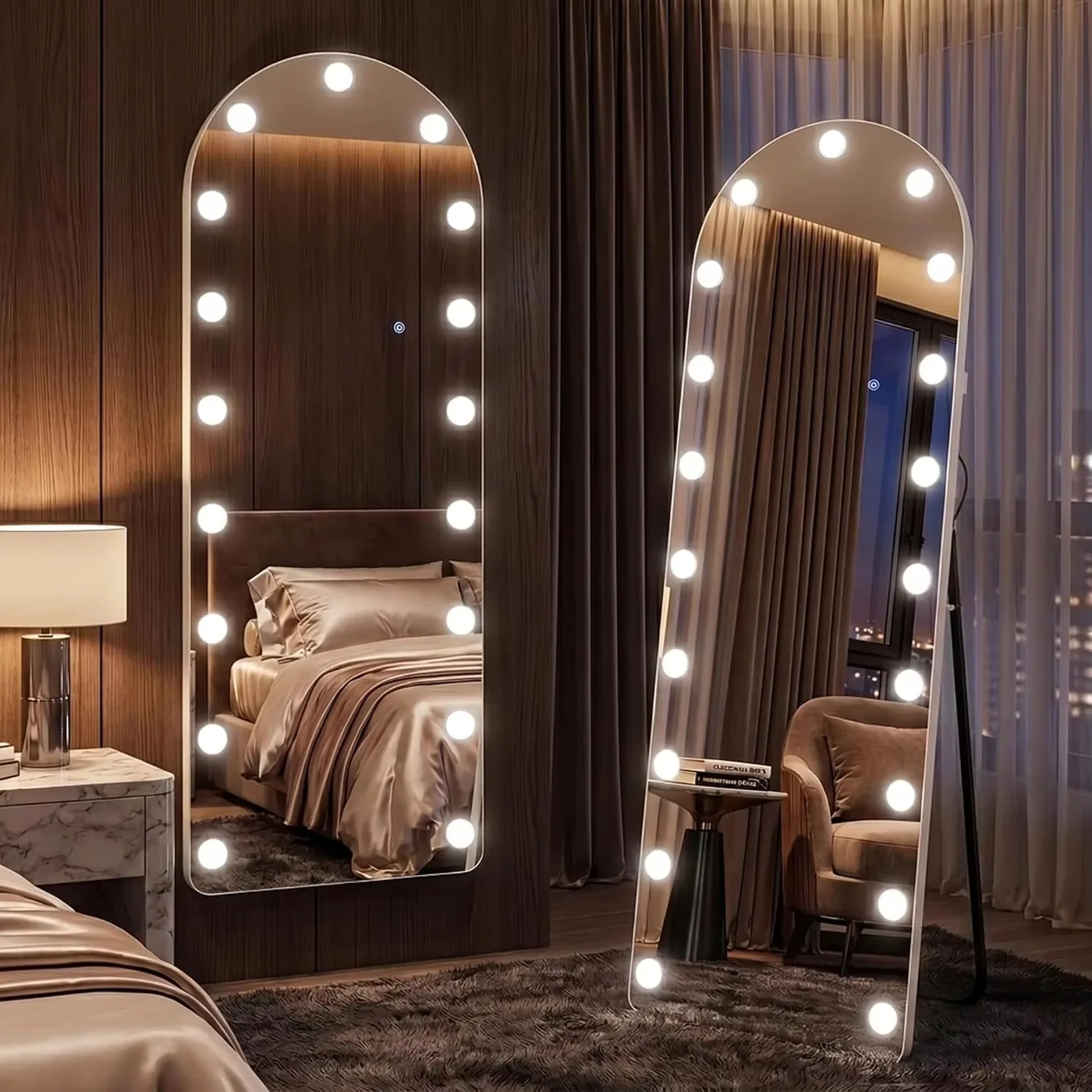
LED mirrors look simple, but the difference between a good one and a disappointing one is in the details. After 20 years manufacturing mirrors, here is the checklist we walk every B2B buyer through before production.
1. Light quality: temperature and CRI
Check the color temperature range (we recommend 3000K–6000K adjustable) and the Color Rendering Index. A CRI above 80 gives true, flattering reflection; cheap strips below that make skin tones look off — a deal-breaker for bathroom and vanity use.
2. Touch control and dimming
A quality LED mirror uses a responsive touch sensor with smooth stepless dimming, not jumpy 3-step brightness. Ask for a video of the actual dimming behavior before approving the sample.
3. Moisture and anti-black-edge protection
Bathroom mirrors live in humidity. Our bathroom-grade mirrors use moisture-resistant edge sealing and anti-black-edge treatment so the silver layer does not corrode at the borders over time.
4. Safety backing
For wall and floor mirrors, insist on shatterproof film backing (and tempered glass where the application demands it). It is a small cost that prevents a big liability.
5. Voltage and certification
Confirm 110V/220V compatibility for your market and ask which certifications the driver and the finished mirror carry. We build to the requirements of each destination market.
Our recommendation
Always approve a physical sample before mass production, and test it in real conditions — steamy bathroom, dim bedroom — not just under factory lights. Contact us for samples and our full LED mirror catalog.